AI
Why AI Chip Financiers Are Betting Big on Inference Chips Instead of GPUs


A New Kind of AI Infrastructure Deal
The AI infrastructure funding playbook is changing. For the last few years, “chip-backed loans” meant one thing: lenders financing GPU purchases so startups could build massive AI training clusters. Now, a new $400 million deal is signaling that the next phase of AI financing may look very different — and it’s centered on inference, not training.
AI inference cloud startup General Compute has landed a $400 million loan from tech investment firm Upper90. What makes this deal notable isn’t just the size — it’s the collateral. Instead of financing GPUs, the loan appears to be the first of its kind backed specifically by inference chips: specialized silicon built to run already-trained AI models efficiently, rather than the far more expensive chips used to train those models in the first place.
What Is General Compute, and Why Does This Deal Matter?
General Compute is a young company. Founded by CEO Finn Puklowski, it raised a $15 million seed round earlier this year to build what’s known as an “inference neocloud” — a cloud infrastructure provider purpose-built for AI workloads, as opposed to general-purpose cloud giants like AWS or Azure.
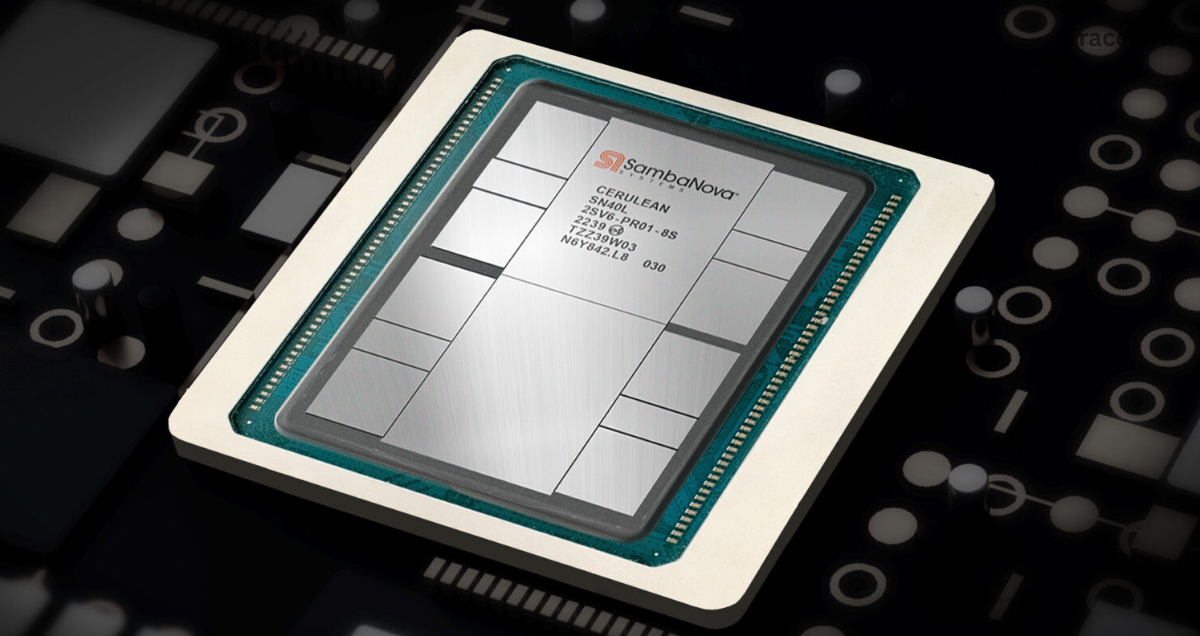
Rather than relying on Nvidia GPUs, General Compute has built its platform around chips from SambaNova, an Intel-backed chipmaker. The company’s SN50 chips are designed specifically for inference workloads. They’re notably power-efficient, don’t require expensive water-cooling infrastructure, and can reportedly be deployed faster and across a wider range of data centers than traditional GPU setups. General Compute claims the chips deliver inference speeds up to 16 times faster than GPU-based cloud alternatives.
The catch for any young infrastructure company: acquiring enough of this specialized hardware is expensive and difficult, especially without an established credit history or brand recognition.

The Financier Behind the Bet
This is where Upper90 comes in. The firm’s co-founder and CEO, Billy Libby — a former Goldman Sachs quantitative trader — has done this before. Back in 2021, Upper90 financed GPU purchases for Crusoe, an energy-focused data center startup, in what’s believed to be one of the earliest loans structured around the resale value of advanced AI chips.
At the time, traditional lenders largely avoided these kinds of deals because GPU depreciation was too uncertain and risky to underwrite confidently. That changed as companies like CoreWeave turned chip-backed lending into a full-fledged business model — one that eventually became the foundation for a high-profile IPO. What was once considered a niche, risky financing structure has since become a fairly standard part of the AI infrastructure playbook.
Now, with GPU markets better understood — and arguably oversaturated — Upper90 is looking at the next opportunity: inference-specific infrastructure.
Why Inference Chips Are the Next Frontier
The thinking behind this shift comes down to a simple observation: not every company building with AI needs to train massive foundation models. Most just need reliable, affordable access to run inference on already-trained models. That distinction matters enormously for cost.
This bet is being reinforced by broader market trends:
- Open-source model providers are raising big rounds. Companies like OpenRouter and Fireworks, which provide access to open AI models, have recently raised funding at high valuations.
- Open models are closing the performance gap. Newer open models, including Kimi’s recently released K3, have shown they can compete with frontier releases from major AI labs on tasks like coding benchmarks.
- Alternative chipmakers are gaining traction. Companies like Groq and Cerebras have attracted serious interest from both acquirers and public markets, signaling growing confidence in non-Nvidia hardware for AI workloads.
Breaking Away From Nvidia’s Grip
Perhaps the most strategically important part of this story is what it signals about the broader chip market. General Compute’s use of SambaNova silicon — rather than Nvidia GPUs — reflects a wider trend of infrastructure providers looking to diversify away from Nvidia’s dominant ecosystem.
General Compute isn’t alone in this approach. TensorWave, another AI infrastructure company, is pursuing a similar strategy through a partnership with AMD. As more viable alternatives to Nvidia hardware emerge, infrastructure providers that aren’t locked into Nvidia-based supply chains may find themselves better positioned to offer cheaper, faster inference services.
The bigger picture, as General Compute’s leadership frames it, is that capital is beginning to organize itself around chips outside the Nvidia ecosystem — chips that already offer competitive total cost of ownership and performance, but have historically lacked enough buyers to attract this kind of institutional financing.
This $400 million deal may be a small transaction in the context of the broader AI infrastructure boom, but its structure could prove far more significant than its size suggests. If inference-chip-backed lending becomes as common as GPU-backed lending has over the past few years, it could accelerate a broader shift in the AI hardware market — one where inference-optimized chips from companies like SambaNova, Groq, Cerebras, and AMD carve out real market share alongside Nvidia’s GPUs.
For an industry that’s spent the last several years almost entirely focused on the race to train bigger models, this deal is an early signal that the race to run those models efficiently is becoming just as important — and just as fundable.
Frequently Asked Questions (FAQs)
1. What is the $400 million deal between General Compute and Upper90?
It’s a loan from investment firm Upper90 to AI inference cloud startup General Compute, reportedly the first major financing deal backed specifically by inference chips rather than GPUs.
2. What does “inference chips” mean in AI infrastructure?
Inference chips are specialized processors designed to run already-trained AI models efficiently, as opposed to training chips (like high-end GPUs), which are used to build and train models from scratch.
3. What company makes the chips General Compute uses?
General Compute uses SN50 chips built by SambaNova, an Intel-backed chipmaker, instead of relying on Nvidia GPUs.
4. What is an “inference neocloud”?
An inference neocloud is a cloud infrastructure provider built specifically for AI inference workloads, in contrast to general-purpose cloud providers like AWS or Azure that serve a broad range of computing needs.
5. Who is behind Upper90, and why is this deal significant for them?
Upper90 is led by co-founder and CEO Billy Libby, a former Goldman Sachs quantitative trader. His firm previously pioneered GPU-backed lending in 2021 by financing chip purchases for data center startup Crusoe, and is now applying a similar model to inference-specific hardware.
6. Why are lenders now interested in financing inference chips instead of GPUs?
As the GPU market has matured and become potentially oversupplied, financiers are looking for the next opportunity. Inference chips represent an emerging category where demand is growing but institutional financing has been limited.
7. How much faster are General Compute’s chips compared to GPU-based clouds? According to General Compute, its inference chips can deliver performance up to 16 times faster than traditional GPU-based cloud infrastructure.
8. Are other companies also moving away from Nvidia GPUs?
Yes. TensorWave, another AI infrastructure company, is pursuing a similar strategy by partnering with AMD instead of relying primarily on Nvidia hardware.
9. Why does open-source AI matter to this financing trend?
Open-source models are becoming increasingly capable and cost-effective to run, reducing the need for companies to rely on the most expensive frontier models. This increases demand for affordable, dedicated inference infrastructure like General Compute’s.
10. What does this deal signal for the broader AI infrastructure market?
It suggests that capital is starting to diversify beyond Nvidia-centric GPU financing and toward alternative chip ecosystems, potentially accelerating competition and lowering costs across the AI inference market.