
Artificial Intelligence has transformed software development. Tasks that once required hours of coding, debugging, documentation, and research can now be completed in minutes using advanced AI assistants. Among the most powerful tools available today, ChatGPT and Claude Opus stand out as leading choices for developers, businesses, and technical teams.
But when it comes to coding, which one performs better?
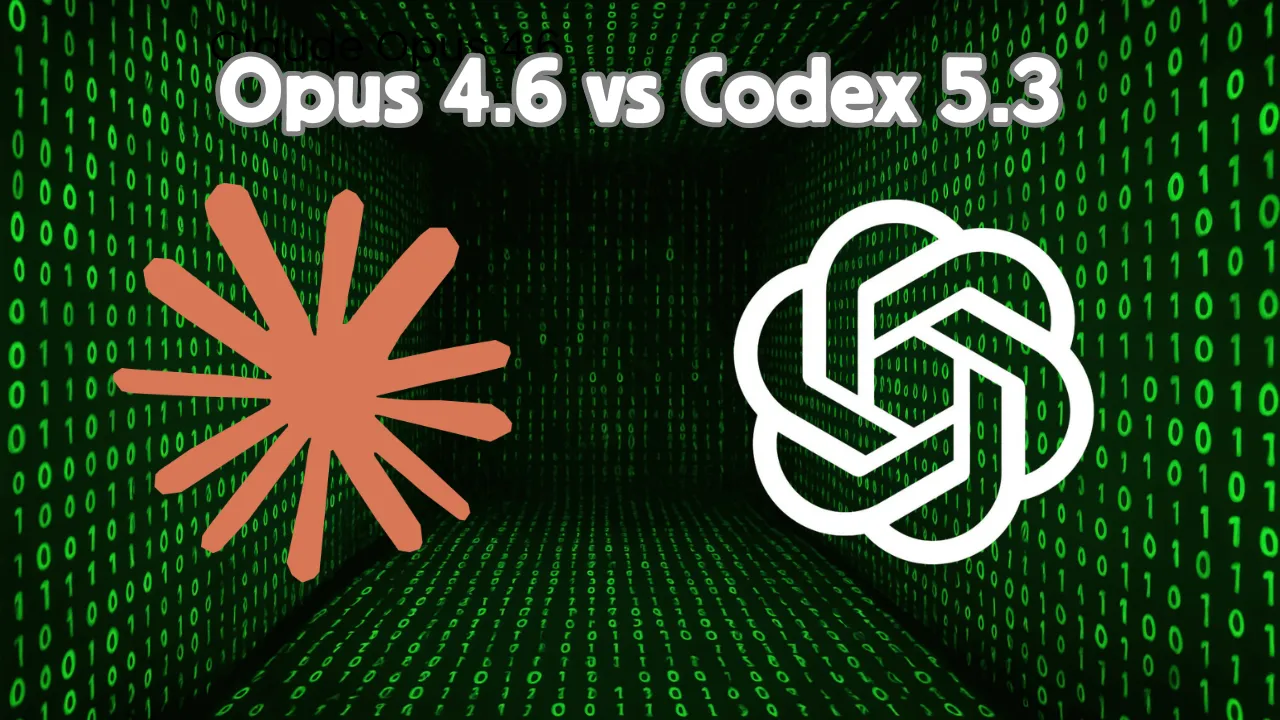
In this comprehensive comparison, we’ll examine ChatGPT Codes vs Claude Opus, analyzing their strengths, weaknesses, coding capabilities, accuracy, debugging skills, context handling, pricing, and real-world use cases.
Whether you’re a beginner developer, software engineer, startup founder, or enterprise team, this guide will help you determine which AI coding assistant best fits your workflow.
What Is ChatGPT?
ChatGPT is an AI assistant developed by OpenAI. It is powered by advanced language models capable of generating code, explaining programming concepts, debugging applications, creating documentation, and assisting with software development tasks.
Modern versions of ChatGPT support:
- Full-stack development
- Python programming
- JavaScript frameworks
- API integrations
- SQL queries
- DevOps automation
- Code refactoring
- Technical documentation
- Data analysis
ChatGPT has become one of the most widely used AI tools among developers because of its ability to understand complex programming requirements and generate production-ready code.
What Is Claude Opus?
Claude Opus is the flagship AI model developed by Anthropic. It is designed to handle complex reasoning, long-context conversations, code generation, and enterprise-level tasks.
Claude Opus is particularly known for:
- Extremely large context windows
- Strong reasoning abilities
- Long-form code analysis
- Detailed explanations
- High-quality documentation generation
- Safe and reliable outputs
Many developers prefer Claude Opus when working with large codebases because it can process significantly more information in a single conversation.
ChatGPT vs Claude Opus: Quick Comparison
| Feature | ChatGPT | Claude Opus |
|---|---|---|
| Code Generation | Excellent | Excellent |
| Debugging | Excellent | Very Good |
| Front-End Development | Excellent | Very Good |
| Large Codebase Analysis | Very Good | Excellent |
| API Development | Excellent | Very Good |
| Context Window | Large | Extremely Large |
| Speed | Fast | Moderate |
| Documentation | Excellent | Excellent |
| Reasoning | Excellent | Excellent |
| Learning Curve | Easy | Easy |
The AI coding assistant landscape in 2026 has never been more competitive. Two titans dominate the conversation: ChatGPT Codex (GPT-5.3/5.5) by OpenAI and Claude Opus (4.6/4.8) by Anthropic. Both promise to revolutionize how developers write, debug, and ship code — but which one actually delivers?
Whether you’re a solo developer, part of an enterprise team, or a competitive programmer, choosing the right AI coding partner can dramatically impact your productivity. This in-depth comparison covers reasoning, code quality, long-context handling, pricing, agentic capabilities, and real-world use cases to help you make the best decision.
A Quick Overview: The Contenders
ChatGPT Codex (GPT-5.3 / GPT-5.5)
OpenAI’s Codex has evolved far beyond its original code-completion roots. In 2026, GPT-5.5 Codex is a full-stack agentic coding engine capable of writing, running, and debugging code autonomously. It integrates deeply with OpenAI’s ecosystem including tools, memory, and browsing. [6]
Claude Opus (4.6 / 4.8)
Anthropic’s Claude Opus series has established itself as the go-to coding agent for production-level software development. With massive context windows, meticulous reasoning, and strong code comprehension, Claude Opus 4.8 is widely regarded as the superior coding agent in head-to-head comparisons. [1]
1. Code Quality & Accuracy
When it comes to raw code output, both models perform at an elite level — but with different strengths.
Claude Opus 4.8 consistently produces cleaner, more maintainable code. It excels at understanding nuanced requirements and generating solutions that follow best practices with minimal prompting. Claude leads in coding benchmarks with an impressive score of 80.8%, outpacing ChatGPT in most code-generation categories.
GPT-5.5 Codex, on the other hand, shines in algorithmic problem-solving and math-heavy code. If your work involves competitive programming, numerical computing, or complex algorithmic challenges, the o-series models under OpenAI’s umbrella still hold an edge. [2]
Winner: Claude Opus for general code quality; GPT-5.5 for algorithm-heavy tasks.
2. Reasoning & Problem-Solving
Both models have advanced reasoning capabilities, but they approach problems differently.
Claude Opus 4.8 demonstrates careful, step-by-step reasoning that makes it particularly effective for debugging complex systems, refactoring legacy codebases, and understanding intricate dependencies. Its methodical approach reduces hallucinations in production scenarios. [1]
GPT-5.5 Codex leverages OpenAI’s o-series reasoning under the hood for math and logic-heavy challenges, making it excellent for tasks like dynamic programming, graph algorithms, and mathematical proofs embedded in code.
For most day-to-day developer reasoning tasks — reading unfamiliar codebases, explaining errors, suggesting architectural patterns — Claude is the stronger choice. [2]
Winner: Claude Opus for everyday reasoning; GPT-5.5 for math-intensive logic.
3. Long-Context & Codebase Understanding
One of Claude Opus’s biggest competitive advantages is its massive context window. This means it can ingest entire repositories, long documentation files, and multi-file projects without losing coherence.
For enterprise developers working with large, legacy codebases, this is game-changing. Claude can cross-reference multiple files, track variable states across functions, and maintain consistency throughout a long coding session. [4]
GPT-5.5 Codex has also improved its context handling significantly, but still trails Claude Opus in raw long-context coherence for very large codebases.
Winner: Claude Opus — clear leader in long-context understanding.
4. Agentic Coding Capabilities
Agentic AI — where the model autonomously plans, executes, and iterates on tasks — is the frontier of coding assistance in 2026.
Claude Opus 4.8 is the better coding agent. [1] It can autonomously handle multi-step development workflows: writing tests, running them, identifying failures, fixing bugs, and iterating — all with minimal human intervention. Claude Code (the agentic interface) has logged over 100+ hours of production-grade performance in real-world comparisons.
GPT-5.5 Codex is a strong generalist agent but functions better when paired with OpenAI’s broader tooling ecosystem (browsing, code interpreter, plugins). It’s more versatile as an all-in-one agent but slightly less focused on pure coding workflows.
Winner: Claude Opus for coding-specific agentic tasks.
5. Writing & Documentation
Documentation is an often-overlooked but critical part of software development. Here, Claude Opus dominates.
Claude writes cleaner, more natural, and more accurate documentation, inline comments, and README files. Its superior writing ability makes it the preferred tool for developer blogs, technical specs, API documentation, and onboarding materials. [4]
GPT-5.5 can produce decent documentation but often sacrifices nuance for speed.
Winner: Claude Opus — no contest in writing quality.
6. Supported Languages & Frameworks
Both models support all major programming languages and frameworks in 2026, including Python, JavaScript/TypeScript, Rust, Go, C++, Java, and more.
Best AI models for coding in 2026 include Claude Opus 4, GPT-4o, Gemini 2.5 Pro, DeepSeek V3, and Qwen3-72B — confirming that both ChatGPT and Claude remain top-tier choices alongside a growing field of competitors. [5]
Neither model has a clear advantage in language breadth, though Claude tends to produce more idiomatic code in languages like Rust and Go.
Winner: Tie.
7. Pricing & Accessibility
Pricing is a key factor for individual developers and startups.
- Claude Opus 4.8 is available via Anthropic’s API and Claude Pro subscription, with usage-based pricing for high-volume enterprise users.
- GPT-5.5 Codex is accessible through OpenAI’s API, ChatGPT Plus, and enterprise tiers.
Both offer competitive pricing in 2026, though specific costs vary by usage volume and tier. For production-grade agentic workflows, costs can add up quickly with either platform. [6]
Winner: Tie — both are competitively priced depending on use case.
Quick Comparison Table
| Category | ChatGPT Codex (GPT-5.5) | Claude Opus 4.8 | Winner |
|---|---|---|---|
| Code Quality | Strong generalist | Cleaner, production-ready | 🏆 Claude |
| Algorithmic Reasoning | Excellent (math-heavy) | Good but not specialized | 🏆 ChatGPT |
| Long-Context Handling | Good | Superior (full repo) | 🏆 Claude |
| Agentic Coding | Versatile agent | Best-in-class agent | 🏆 Claude |
| Documentation & Writing | Decent | Excellent | 🏆 Claude |
| Ecosystem Integration | Vast (GitHub, Azure) | Growing | 🏆 ChatGPT |
| Pricing | Competitive | Competitive | 🤝 Tie |
8. Ecosystem & Integrations
GPT-5.5 Codex benefits from OpenAI’s vast ecosystem: seamless integration with Microsoft tools (GitHub Copilot, Azure, VS Code), ChatGPT plugins, browsing, and memory. For developers already in the Microsoft/OpenAI ecosystem, this is a significant advantage. [3]
Claude Opus integrates well with third-party tools and APIs, and Claude Code works natively in terminal environments. However, its ecosystem is still maturing compared to OpenAI’s. [2]
Winner: GPT-5.5 Codex for ecosystem breadth.
9. Who Should Use What?
| Use Case | Recommended Model |
|---|---|
| Day-to-day coding assistant | Claude Opus |
| Algorithmic/math-heavy code | GPT-5.5 Codex |
| Large codebase understanding | Claude Opus |
| Documentation & writing | Claude Opus |
| Agentic coding workflows | Claude Opus |
| Microsoft/GitHub ecosystem | GPT-5.5 Codex |
| Competitive programming | GPT-5.5 Codex |
| API & production integration | Claude Opus |
Final Verdict
The pattern is clear: GPT-5.5 Codex is the better generalist; Claude Opus 4.8 is the better coding agent. [1] For most working developers who need a reliable, accurate, and context-aware day-to-day coding assistant, Claude Opus is the stronger choice in 2026. [2]
If you’re deeply embedded in OpenAI’s ecosystem, need strong algorithmic reasoning, or want the broadest set of integrations, ChatGPT Codex remains a world-class option.
The best approach? Try both — many developers use Claude Opus for coding sprints and GPT-5.5 for research, math, and tool-heavy tasks. In 2026, you don’t have to choose just one.