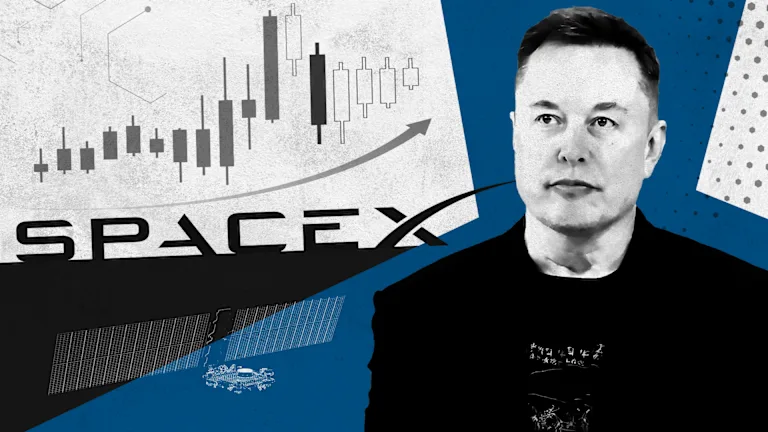

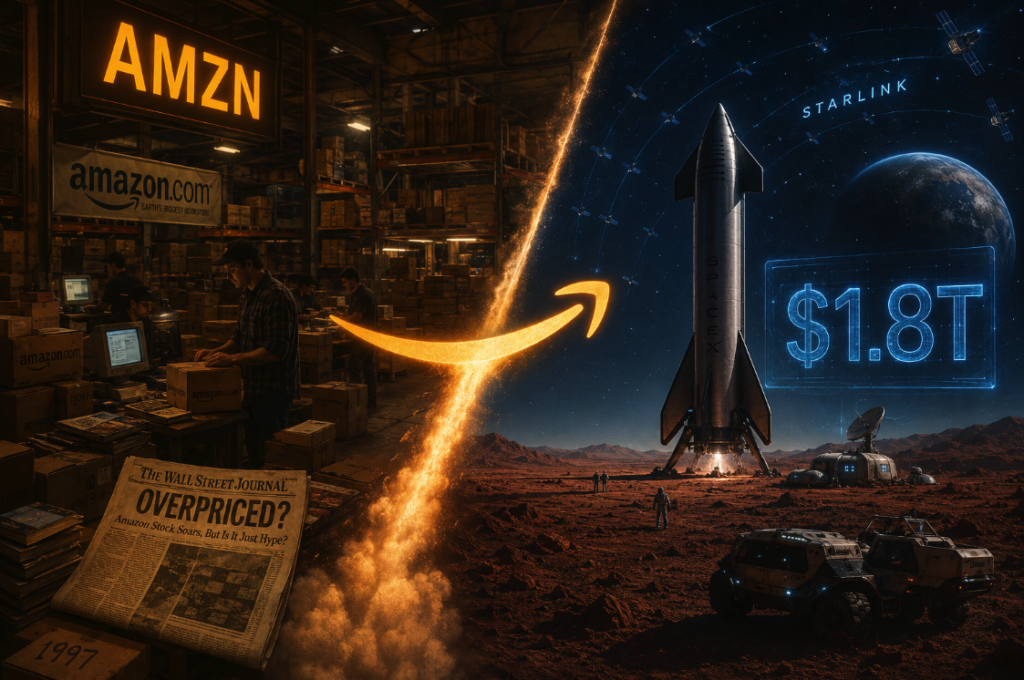
In the span of just four trading days, Elon Musk’s space and technology empire rewrote the rulebook on what a newly public company can achieve. SpaceX, formally known as Space Exploration Technologies Corp, crossed a threshold on Tuesday, June 16, that few could have predicted even months ago — its market capitalization briefly surpassed Amazon’s, touching $2.6 trillion and, in some moments, stretching toward $2.9 trillion before pulling back. It was a breathtaking milestone for a company that only began trading on the Nasdaq on June 12, 2026, and it cemented SpaceX’s place in the conversation about the most valuable companies in American history.
To put the moment in perspective: Amazon, a company Jeff Bezos spent nearly three decades building into a global retail and cloud computing juggernaut, was momentarily leapfrogged by a rocket firm that posted a $4.9 billion net loss just last year. Wall Street didn’t seem to mind. In fact, Wall Street appeared to actively celebrate it.
The IPO That Shook the Markets
SpaceX’s public debut was already historic before a single share changed hands on the open market. The company priced its initial public offering at $135 per share, targeting an opening valuation of approximately $1.75 trillion — a figure that alone would have made it the largest IPO in American history, raising nearly $86 billion for the company in the process.
On its first full day of trading, June 12, shares surged nearly 20%, closing around $161. That single-day move pushed SpaceX’s market capitalization above $2 trillion immediately, vaulting it past established technology heavyweights like Broadcom before most investors had finished their morning coffee.
The rally didn’t stop there. Through the weekend and into the following week, buying pressure continued to build. By June 16, premarket trading showed SpaceX shares climbing above $212, pushing its market capitalization past Amazon’s roughly $2.66 trillion valuation. By midday, the stock had touched $225.64 — an all-time high — before settling back. In after-hours trading, the valuation briefly eclipsed Amazon’s for a second time.
In total, SpaceX had added roughly $1 trillion to its valuation in under a week of public trading.
What Is Driving the Frenzy?
The obvious question any rational investor must ask is: why? How does a company with $18.7 billion in annual revenue and a $4.9 billion net loss earn a market capitalization that exceeds Amazon — a company that posted a $78 billion profit on $717 billion in sales in 2025?
The answer lies in what investors believe SpaceX is becoming, rather than what it is today.
Starlink: The Revenue Engine of Tomorrow
The most concrete bull case for SpaceX rests on Starlink, its satellite internet division. Starlink has grown at a pace that even optimistic forecasters have struggled to keep up with, expanding into consumer, enterprise, aviation, maritime, and government markets globally. Over 3 billion people around the world still lack reliable internet access, and Starlink’s low-earth-orbit constellation is positioned as a direct solution to that problem.
Government contracts add a further layer of stability to the thesis. SpaceX holds an estimated 97% market share of the U.S. Space Force’s Proliferated Low Earth Orbit program task orders. Its relationship with NASA spans a $2.9 billion Artemis human landing system contract and ongoing Commercial Crew Program missions. These are not speculative revenue lines — they are multi-year agreements with some of the world’s most creditworthy counterparties.
That said, Starlink is not without its complications. Average revenue per subscriber has declined from roughly $99 per month in 2023 to approximately $66 today, as the service expands into price-sensitive markets across Africa, Southeast Asia, and Latin America. Volume growth is outpacing per-user revenue loss for now, but the margin between those two rates is narrowing. Amazon is also building its own satellite internet venture, Project Kuiper, which represents a direct competitive threat — a somewhat ironic detail given that SpaceX just briefly overtook Amazon in market cap.
Reusable Rockets and the Cost Revolution
SpaceX’s reusable rocket technology, exemplified by the Falcon 9 and the ambitious Starship development program, represents the second pillar of the investment thesis. By successfully landing and relaunching orbital-class boosters, SpaceX has fundamentally restructured the economics of space access. Launch costs that once ran to hundreds of millions of dollars have dropped by orders of magnitude, and SpaceX captures the vast majority of global commercial launch market share as a result.
Starship, if it reaches full operational maturity, could push this cost reduction even further while also enabling entirely new mission profiles — from point-to-point cargo delivery to crewed missions to Mars. Investors are pricing in the possibility that SpaceX doesn’t just dominate the current launch market, but defines whatever comes next.
The AI Dimension: xAI and Now Cursor
Perhaps the most important factor separating this year’s SpaceX from the private company that investors once knew is its radical expansion into artificial intelligence.
In February 2026, SpaceX completed an all-stock acquisition of Elon Musk’s AI company xAI — creator of the Grok large language model — structuring it as a wholly owned subsidiary in a deal that valued the combined company at approximately $1.25 trillion. The logic behind the acquisition was to link AI development directly to SpaceX’s satellite and launch capabilities, including a long-term vision of space-based AI data centers. The combined public entity includes Starlink broadband, Grok AI, SpaceX rockets, and the social platform X, making it one of the most unusual and sprawling corporate structures ever brought to a public market.
Then, on the same day SpaceX briefly overtook Amazon in valuation, it announced another blockbuster deal. On June 16, 2026, the company confirmed a definitive $60 billion all-stock merger agreement to acquire Anysphere — the parent company behind Cursor, the AI coding tool that has quietly become one of the most widely used software development products in the world. Cursor is used by an estimated 64% of Fortune 500 companies and generates approximately $2.6 billion in annual recurring revenue.
The deal is structured to close in the third quarter of 2026, subject to regulatory approvals. For existing SpaceX investors, the acquisition represents roughly 3.4% dilution at the IPO valuation — a price many appear willing to pay.
SpaceX has also recently added new revenue streams through non-binding compute leasing arrangements with Anthropic and Google, signaling that its AI infrastructure ambitions extend well beyond its own internal products. The company committed $12.7 billion on AI in 2025 and an additional $7.7 billion in just the first quarter of 2026 alone.
The Float Problem and the Volatility It Creates
One structural factor that both explains SpaceX’s rapid price appreciation and serves as a caution flag for investors is the company’s deliberately constrained share float.
SpaceX made only about 4% of its total shares available for public trading at IPO. That means just 555 million shares were on the open market as of last week. On Tuesday alone, traders exchanged more than 300 million SpaceX shares — more than half of all publicly available stock — in a single session. The launch of options trading on SpaceX’s shares that same day added another accelerant to the fire, giving traders new tools to express directional bets on a stock that was already moving violently.
When enormous retail and institutional demand collides with a small available float, the result is exactly what markets have witnessed over the past week: a stock that jumped 20% on its first trading day, continued rising through the weekend, touched new all-time highs on Tuesday, and spiked to a $2.9 trillion peak intraday before cooling. The same dynamics that propelled the stock upward could — and likely will — pull it back sharply when sentiment shifts or when insider lockups begin to expire.
The December 2026 lockup expiry, when many early employees and investors will first be permitted to sell their shares, is identified by analysts as the most significant supply risk on the horizon for SPCX.
The Valuation Puzzle
For anyone attempting to anchor SpaceX’s valuation to conventional financial metrics, the numbers are genuinely staggering.
SpaceX reported $18.7 billion in revenue for 2025. At its current valuation north of $2.5 trillion, the company is trading at roughly 94 to 151 times trailing revenue, depending on the exact price used for the calculation. Even assuming the company can more than double its revenue to $45 billion in 2026 — an optimistic projection — the stock would still trade at over 60 times forward sales.
For context, Palantir Technologies, often cited as one of the most richly valued stocks on the market, trades at approximately 41 times sales. Amazon, the company SpaceX just briefly overtook, trades at a fraction of a comparable revenue multiple. The gap in underlying business scale is equally striking: Amazon generated $742 billion in revenue over a comparable timeframe — roughly 40 times more than SpaceX.
Morningstar’s analysts have published a fair value estimate of $63 per share for SPCX, a figure that stands in stark contrast to the $200-plus levels at which the stock has been trading. Most Wall Street analysts had set a consensus price target of around $164 — itself above the IPO price — and shares blew through that level within days of going public.
None of this necessarily means the stock is wrong. Markets are pricing in a future, not a present. SpaceX’s regulatory filing predicted that enterprise AI applications will become a $22.7 trillion market, and the company has staked out an unusually broad position across satellites, rockets, AI models, AI coding tools, and social media in a bid to capture a slice of that future.
But the distance between today’s financials and today’s market capitalization is unusually wide, even by the standards of high-growth technology investing.
Elon Musk: The World’s First Trillionaire
SpaceX’s share surge has had an immediate and highly personal consequence for its founder. The rapid appreciation of SPCX pushed Elon Musk’s personal net worth past the $1 trillion mark — making him, by most measures, the first person in recorded history to achieve that milestone.
Musk’s stake in SpaceX, combined with his holdings in Tesla, xAI, and other ventures, has placed him in a category of wealth that previously existed only in corporate balance sheets, not personal fortunes. The milestone has generated considerable commentary about the nature of modern wealth concentration and what a $1 trillion net worth means for a single individual’s ability to influence markets, governments, and technological trajectories.
Musk commented on X that SpaceX might be able to achieve extraordinary things with the capital and capabilities now at its disposal — though precise projections remained characteristic of his public communications style: bold and directionally confident, short on specific commitments.
What Amazon Thinks About All This
Project Kuiper, Amazon’s satellite internet initiative, represents a direct competitive challenge to Starlink. While Kuiper is years behind Starlink in deployment scale and subscriber count, Amazon’s enormous financial resources and distribution capabilities make it a credible long-term rival. The satellite internet market has room for more than one major player given its global scope, but SpaceX and Amazon are likely to spend the next decade as fierce competitors across overlapping customer segments.
Amazon Web Services remains the world’s dominant cloud computing platform and continues to generate tens of billions in operating profit annually — a financial engine that SpaceX, despite its staggering market capitalization, does not yet have a comparable equivalent to. The question of whether SpaceX can build the operational leverage to justify its valuation over a five-to-ten-year horizon remains genuinely open.
The Broader Significance
Stepping back from the daily price movements and the acquisition headlines, what SpaceX’s first week as a public company represents is something worth pausing to appreciate.
A company founded in 2002 with the explicit goal of making humanity multi-planetary — a goal that most serious observers considered eccentric at best and delusional at worst — has become one of the five most valuable companies in the United States within four days of its stock market debut. It did so by actually building rockets that work, satellite networks that people pay for, and by absorbing cutting-edge AI capabilities that position it for industries far beyond aerospace.
The path from a scrappy startup that nearly went bankrupt in 2008 to a $2.6 trillion public giant in 2026 is, by any measure, one of the more remarkable corporate journeys in American business history. Whether the current valuation is sustainable, justified, or headed for a painful correction is a question that will be answered by markets over the months and years ahead.
What isn’t in question is that SpaceX’s IPO has been, by every quantitative measure available, the most consequential stock market debut in history.
And it’s only just begun trading.
Key Takeaways
SpaceX debuted on the Nasdaq on June 12, 2026, raising nearly $86 billion at a $1.75 trillion valuation — the largest IPO in American history. By June 16, its stock had climbed above $212, briefly pushing its market cap past Amazon’s $2.66 trillion. The company’s bull case rests on Starlink’s global satellite internet growth, reusable rocket technology, and an expanding AI portfolio anchored by its February 2026 acquisition of xAI and a fresh $60 billion all-stock deal to acquire Cursor. SpaceX posted a $4.9 billion net loss on $18.7 billion in revenue in 2025, and currently trades at over 94 times trailing revenue — a valuation that reflects investor expectations of a very different company in the years ahead. Elon Musk’s stake in SpaceX pushed his net worth above $1 trillion, making him the world’s first trillionaire. The December 2026 lockup expiry represents the most significant near-term risk to the stock’s momentum.
This article is for informational purposes only and does not constitute financial or investment advice.
Frequently Asked Questions
1. When did SpaceX go public, and at what price?
SpaceX began trading on the Nasdaq on June 12, 2026, priced at $135 per share. The IPO raised nearly $86 billion and set an opening valuation of approximately $1.75 trillion — making it the largest IPO in American history by a significant margin.
2. How did SpaceX's valuation reach $2.6 trillion so quickly?
SpaceX shares surged nearly 20% on their first trading day, pushing the market cap above $2 trillion immediately. Buying pressure continued through the week, driven by massive retail and institutional demand colliding with a very small public float — only about 4% of total shares were available for trading. By June 16, the stock had climbed above $212, briefly pushing the valuation past Amazon's $2.66 trillion.
3. Is SpaceX profitable? How can it be worth $2.6 trillion with losses?
SpaceX is not currently profitable — it posted a $4.9 billion net loss on $18.7 billion in revenue in 2025. Its valuation of over 94 times trailing revenue is not based on current financials but on what investors believe the company will become. The bull case centers on Starlink's global internet growth, reusable rocket dominance, and a rapidly expanding AI portfolio including xAI and the newly announced $60 billion acquisition of Cursor. Markets are, in effect, betting on the future version of SpaceX.
4. What is Starlink and why is it so important to SpaceX's valuation?
Starlink is SpaceX's satellite internet division, providing broadband connectivity via a low-earth-orbit constellation of satellites. It serves consumer, enterprise, aviation, maritime, and government customers globally. With over 3 billion people still lacking reliable internet access, Starlink's addressable market is enormous. It also benefits from long-term government contracts, including a dominant position in U.S. Space Force satellite programs and a $2.9 billion NASA Artemis contract. Starlink is considered the most concrete near-term revenue driver underpinning SpaceX's premium valuation.
5. What is the Cursor acquisition and why does it matter?
On June 16, 2026 — the same day SpaceX briefly overtook Amazon — the company announced a $60 billion all-stock deal to acquire Anysphere, the parent company of Cursor, an AI-powered coding assistant used by an estimated 64% of Fortune 500 companies. Cursor generates approximately $2.6 billion in annual recurring revenue and was ranked on the CNBC Disruptor 50 list. The acquisition signals SpaceX's ambition to become a dominant force in enterprise AI software, not just aerospace and satellite communications.
6. Is SpaceX overvalued? What do analysts say?
By conventional metrics, many analysts believe SpaceX is significantly overvalued. Morningstar has published a fair value estimate of just $63 per share — compared to the $200-plus it has been trading at. The consensus Wall Street price target was around $164, which shares blew past within days of listing. SpaceX currently trades at 94 to 151 times trailing revenue, far exceeding even the most richly valued tech companies. That said, analysts acknowledging overvaluation are also quick to note that SpaceX's combination of satellite internet, reusable rockets, AI, and social media assets is genuinely unique and difficult to value using traditional frameworks.
7. Did Elon Musk really become the world's first trillionaire?
Yes. The rapid appreciation of SpaceX's share price, combined with Musk's existing holdings in Tesla, xAI, and other ventures, pushed his personal net worth above $1 trillion — making him the first individual in recorded history to reach that milestone. The achievement has sparked broad discussion about modern wealth concentration and its implications for markets, policy, and global influence.
8. What are the biggest risks for SpaceX investors right now?
The two most significant near-term risks are the limited public float and the December 2026 lockup expiry. With only 4% of shares publicly tradable, extreme volatility in both directions is likely. When the lockup expires in December, early employees and investors will be permitted to sell their shares for the first time, potentially flooding the market with new supply. On the competitive side, Amazon's Project Kuiper poses a long-term challenge to Starlink, and the success of SpaceX's AI ambitions — including the Cursor integration — remains unproven at scale.