Technology
SambaNova Raises $1 Billion at an $11 Billion Valuation — Just Months After Intel Almost Bought It

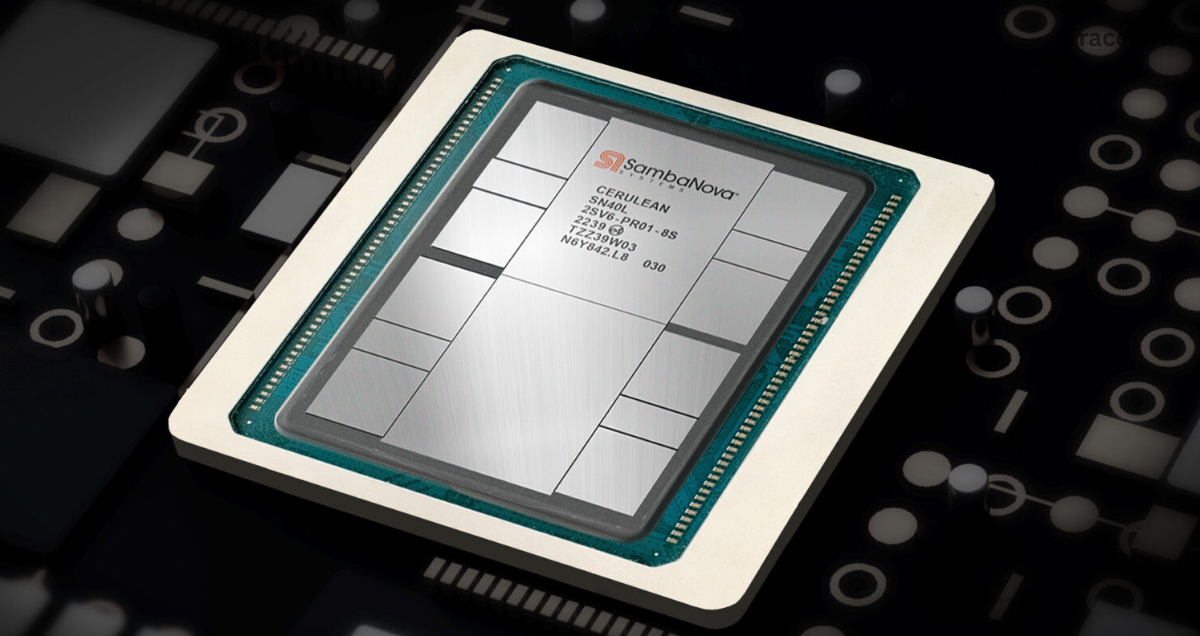
The AI chip race keeps producing headline-grabbing funding rounds, and the latest comes from SambaNova Systems. The Palo Alto-based AI inference chip maker has closed the first tranche of a Series F round, pulling in $1 billion at an $11 billion valuation, led by General Atlantic. It’s a striking jump for a company that, less than a year ago, was reportedly in acquisition talks with Intel at a valuation of roughly $1.6 billion.
Here’s a full breakdown of the round, what it says about SambaNova’s trajectory, and why enterprise AI infrastructure is suddenly attracting this level of capital.
The Round: Who’s Involved and What Comes Next
SambaNova’s Series F first close brings in $1 billion, with General Atlantic leading the round. According to CEO and co-founder Rodrigo Liang, this isn’t the full story yet — additional investors are expected to join in the coming weeks as the round moves toward a second close.
The list of backers is notably broad, spanning traditional asset managers and sovereign capital alike. Participants include Seligman Ventures, T. Rowe Price Associates, and Capital Group, alongside a mix of new and returning investors such as BlackRock, Battery Ventures, Vista Equity Partners, the Qatar Investment Authority, and Intel itself, which has backed the company since its Series C.
From Intel Acquisition Talks to an $11 Billion Valuation
What makes this round particularly notable is the contrast with where SambaNova stood just months earlier. Reports from December suggested Intel was closing in on a deal to acquire the nine-year-old startup for approximately $1.6 billion. Those talks ultimately stalled, and SambaNova instead raised a $350 million Series E in February, alongside unveiling its next-generation SN50 chip.
Asked directly whether locking in back-to-back funding rounds meant SambaNova had settled on staying independent rather than pursuing an acquisition or IPO, Liang was noncommittal. He acknowledged the company continues to field acquisition interest, but suggested that its current growth trajectory points more naturally toward an eventual public listing than a sale.
That’s a significant shift in framing for a company that was, not long ago, in serious buyout discussions with one of the biggest names in chipmaking.
The Intel Relationship Runs Deeper Than a Failed Acquisition
Even though the acquisition talks didn’t pan out, SambaNova’s relationship with Intel hasn’t cooled — if anything, it has deepened. Around the same time as its February funding round, SambaNova announced a multi-year partnership with Intel focused on AI inference development built around Intel’s Xeon chip architecture. The two companies now co-develop products and bring them to market jointly, giving SambaNova access to Intel’s scale while Intel gains a foothold in specialized inference hardware.
Intel’s continued participation as an investor in this latest Series F round underscores that the relationship, while it didn’t result in a sale, has evolved into an ongoing strategic partnership instead.
A Major New Customer: JPMorganChase
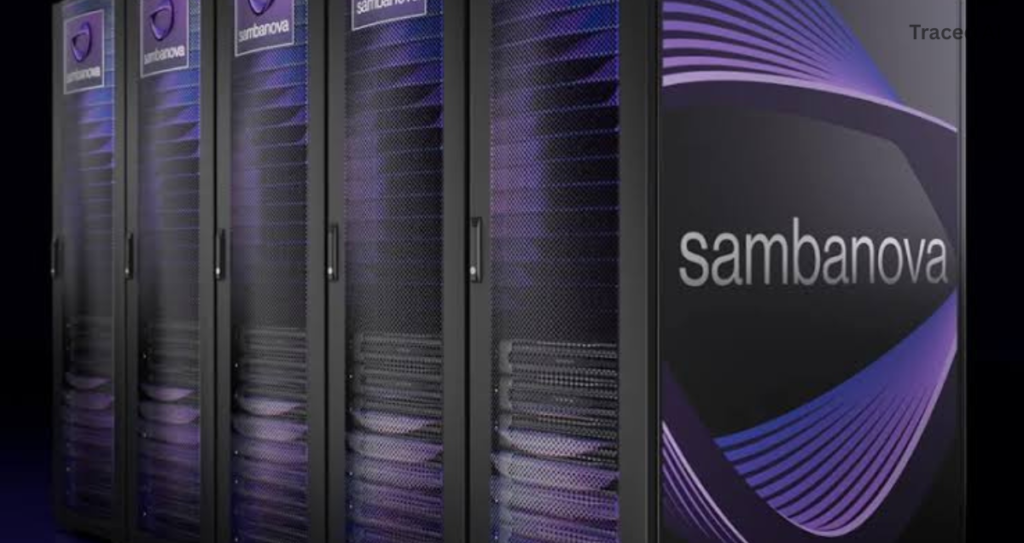
Alongside the funding news, SambaNova revealed a significant enterprise win: JPMorganChase has selected the company as an inference-infrastructure partner, planning to use SambaNova’s SN40L and SN50 systems to run secure, on-premises AI inference internally.
Liang framed the deal as more than just a single contract — he described it as a signal to the broader banking industry that financial institutions are moving away from total reliance on cloud-based AI services. Banks operating at that scale, he noted, are increasingly interested in building their own private, secure, and heterogeneous infrastructure rather than depending entirely on external cloud providers.
That shift matters beyond banking. If large financial institutions are beginning to build dedicated on-premises inference infrastructure, it could signal a broader trend among regulated industries and governments that handle highly sensitive data and want tighter control over how their AI models are deployed and run.
Why SambaNova Believes There’s Still a “Huge Amount of Revenue” Untapped
According to Liang, most of the AI infrastructure spending so far has been concentrated among a relatively narrow group of players — primarily the major model-making labs and frontier AI companies. Enterprises and governments, by contrast, are still in the early stages of adopting AI at scale, which Liang sees as an enormous, largely untapped source of future revenue for infrastructure providers like SambaNova.
That thesis lines up with how the company describes its customer base. SambaNova groups its customers into three broad categories: sovereign clouds, where governments fund local partners to build private AI infrastructure; neoclouds, a newer category of specialized cloud providers built specifically around AI workloads; and enterprises building AI systems for their own internal use. Beyond JPMorganChase, the company counts Saudi Aramco, Intel, and several Japanese firms among its customers.
The Technology Behind the Pitch: Handling Trillion-Parameter Models
SambaNova’s core technical pitch centers on what the company calls “premium inference” — the ability to run today’s largest AI models, which can span trillions of parameters, quickly and efficiently. The company says its architecture is specifically designed to fit multi-trillion-parameter models onto a single hardware rack, which helps reduce latency and improve throughput compared to more conventional setups.
The company’s current flagship chip, the SN40L, first launched in cloud form in September 2023 before becoming available on-premises later that year. Its successor, the SN50, was unveiled in February 2026 and is expected to begin shipping to customers in the second half of the year, with SoftBank lined up as its first deployment partner.
What SambaNova Plans to Do With the New Capital
Liang said the fresh capital will primarily go toward scaling the business and reinforcing SambaNova’s supply chain, which he described as facing an intense wave of demand. Securing components and materials well in advance is central to the company’s ability to fulfill customer orders over the next year, particularly as it ramps up production and shipping of the SN50.
In a hardware business where chip shortages and supply chain bottlenecks have repeatedly disrupted timelines across the industry, that kind of proactive capital allocation is a meaningful signal about how seriously SambaNova is treating its growth targets.
What This Round Says About the Broader AI Chip Market
SambaNova’s jump from a rumored $1.6 billion acquisition price to an $11 billion primary funding valuation in under a year is a dramatic illustration of just how quickly valuations are moving in the AI infrastructure space. It also reflects a broader dynamic playing out across the industry: as demand for AI inference — not just training — continues to grow, companies that specialize in efficiently running large models are becoming increasingly valuable, sometimes independent of whether they end up being acquired by a larger player.
The involvement of institutional investors like BlackRock and T. Rowe Price, alongside sovereign wealth participation from the Qatar Investment Authority, also suggests that AI infrastructure is increasingly being treated as a durable, long-term asset class rather than a purely speculative bet. For SambaNova, that translates into both validation and runway — resources to keep building out its supply chain and product roadmap as it eyes what Liang suggested could eventually be a path toward the public markets.
Frequently Asked Questions
1. How much did SambaNova raise in its Series F round? SambaNova raised $1 billion in the first close of its Series F round at an $11 billion valuation, led by General Atlantic. Additional investors are expected to join in a second close in the coming weeks.
2. Did Intel really try to acquire SambaNova? Yes. Reports from December indicated Intel was in talks to acquire SambaNova for approximately $1.6 billion. Those talks ultimately stalled, and SambaNova instead raised additional funding rounds and continued operating independently.
3. Is SambaNova still working with Intel? Yes. Despite the acquisition talks not resulting in a deal, SambaNova and Intel have a multi-year partnership focused on AI inference development built around Intel’s Xeon chip, and Intel remains an investor in the company.
4. What is SambaNova’s deal with JPMorganChase? JPMorganChase has selected SambaNova as an inference-infrastructure partner, planning to use its SN40L and SN50 chip systems to power secure, on-premises AI inference within the bank.
5. What makes SambaNova’s chips different from other AI hardware? SambaNova specializes in “premium inference” — designing its architecture to run today’s largest AI models, which can span trillions of parameters, quickly and efficiently, including fitting multi-trillion-parameter models onto a single hardware rack.
6. Will SambaNova go public? CEO Rodrigo Liang was noncommittal about a specific timeline but suggested that continued growth and momentum are more likely to eventually lead the company toward an IPO than an acquisition.
7. What will SambaNova do with the new funding? The company plans to use the capital to scale its business operations and strengthen its supply chain, ensuring it can meet growing customer demand as it ramps up shipments of its new SN50 chip.
8. Who are SambaNova’s other major customers? In addition to JPMorganChase, SambaNova counts Saudi Aramco, Intel, and several Japanese firms among its customers, and categorizes its broader customer base into sovereign clouds, neoclouds, and enterprises.